Choosing the right density for your lace wig is one of the most important decisions you can make when buying a wig. Density affects how natural your wig looks, how much volume it has, how comfortable it feels, and even how long it lasts. If you choose too low, your wig may look thin and unnatural. If you choose too high, it may feel heavy and less realistic.
In this guide, we’ll break down everything you need to know about lace wig density so you can confidently choose the best option for your style, lifestyle, and face shape.
Table of Contents
ToggleWhat Does Wig Density Mean?
Wig density refers to how much hair is attached to the wig cap. It is usually expressed as a percentage compared to natural human hair density.
For example:
- 100% density = very natural, light hair volume
- 150% density = medium fullness (most common natural look)
- 200%+ density = very full, voluminous hair
In simple terms, the higher the density, the thicker and fuller your wig will look.
Common Lace Wig Densities Explained
130% Density – Natural and Lightweight
130% density is close to natural human hair thickness. It’s a great choice if you want a subtle, everyday look.
Best for:
- Professional or office environments
- Hot climates
- People who prefer minimal volume
Pros:
- Very natural appearance
- Lightweight and breathable
- Easy to maintain
Cons:
- Less styling versatility
- Not ideal for glamorous or voluminous styles
150% Density – Natural Full Look (Most Popular)
150% density is the most commonly chosen option for lace wigs. It offers a balance between natural appearance and fullness.
Best for:
- First-time wig buyers
- Everyday wear with style flexibility
- Natural but slightly enhanced volume
Pros:
- Looks natural yet fuller than bio hair
- Works for most hairstyles
- Comfortable for daily use
Cons:
- Not ultra-voluminous for dramatic styles
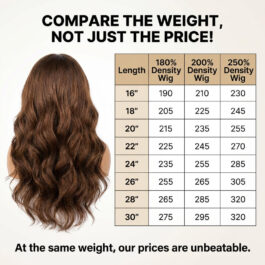
180% Density – Full and Glamorous
180% density is where wigs start to look noticeably fuller and more glamorous.
Best for:
- Special occasions
- Fashion-forward looks
- People who love volume and bounce
Pros:
- Thick and voluminous appearance
- Great for curls and waves
- Photogenic and bold
Cons:
- Slightly heavier than lower densities
- May require more maintenance
200% Density – Extra Full Volume
200% density is designed for those who love big, dramatic hair.
Best for:
- Stage performances
- High-fashion styling
- Bold beauty statements
Pros:
- Very full and dramatic look
- Holds curls well
- High styling impact
Cons:
- Can feel heavy
- Less natural in close-up settings
- Requires more care
250% Density – Ultra Thick and Bold
250% density is the maximum commonly available density for lace wigs and delivers maximum volume.
Best for:
- Celebrity-inspired hairstyles
- Extreme glam looks
- Customers who want maximum fullness
Pros:
- Extremely voluminous
- Eye-catching and bold
- Ideal for heavy styling
Cons:
- Not natural-looking for everyday wear
- Heavier and warmer
- Requires strong wig maintenance routine
How to Choose the Right Wig Density
When choosing wig density, consider the following factors:
1. Your Natural Hair Density
If your natural hair is fine or thin, a 130%–150% density wig will look most realistic. If your natural hair is thick, 180% may blend better.
2. Your Lifestyle
- Busy, active lifestyle → 130%–150% (lighter and easier to manage)
- Fashion-focused or social lifestyle → 180%+ (more styling flexibility)
3. Climate and Comfort
In hot or humid climates, lower density wigs feel more comfortable and breathable. Higher densities may trap more heat.
4. Hairstyle Goals
- Straight bob or natural look → 130%–150%
- Body waves or curls → 150%–180%
- Big glam curls or high-volume styles → 180%–250%
5. Face Shape Consideration
- Round face → 150%–180% adds elongation
- Oval face → works well with any density
- Square face → 150%–180% softens angles
- Heart-shaped face → 130%–150% keeps balance natural
Beginner Recommendation
If you are buying your first lace wig and are unsure what to choose, 150% density is usually the safest and most versatile option. It provides a natural yet noticeable enhancement without being too heavy or too flat.
Common Mistakes to Avoid
Choosing Too High Density for a Natural Look
Many beginners think “bigger is better,” but overly dense wigs can look unrealistic in everyday settings.
Ignoring Maintenance Needs
Higher density wigs require more detangling, washing, and care.
Not Considering Climate
Thick wigs in hot environments can feel uncomfortable over time.
Final Thoughts
The right lace wig density depends on your personal style, comfort, and how natural or dramatic you want your look to be. If you want something safe and versatile, go with 150%. If you want glamour and volume, 180% or higher will give you that bold effect.
Understanding wig density helps you make a smarter purchase—and ensures your lace wig looks exactly the way you want it to.