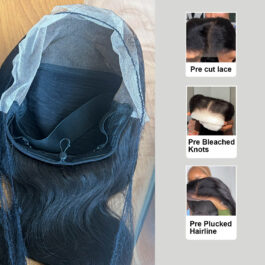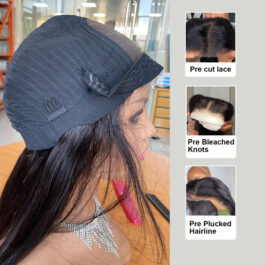
When shopping for wigs or hair extensions, two terms you’ll see repeatedly are lace closure and lace frontal. At first glance, they may seem similar—both use lace and both help create a natural-looking hairline. However, they differ significantly in coverage, styling flexibility, maintenance, and overall look.
In this guide, we’ll break down lace closure vs. lace frontal in simple terms so you can confidently choose the right option for your hairstyle goals.
Table of Contents
ToggleWhat Is a Lace Closure?
A lace closure is a small lace piece (usually 4×4, 5×5, or sometimes 6×6 inches) placed at the top or front of a wig or sew-in install. It is designed to “close” the hairstyle, giving the appearance of a natural scalp where the hair is parted.
Key Features of Lace Closures:
- Limited lace area (small parting space)
- Usually placed in the middle or slightly off-center
- Creates a natural-looking scalp at the crown or front
- Requires less maintenance than a frontal
Benefits of Lace Closures:
- Beginner-friendly and easy to install
- More affordable than lace frontals
- Longer lifespan due to smaller lace area
- Lower maintenance and less daily styling
Limitations:
- Limited parting space (no ear-to-ear styling)
- Fewer styling options
- Less versatility for ponytails or slick-back styles
What Is a Lace Frontal?
A lace frontal is a larger lace piece that runs from ear to ear, typically 13×4 or 13×6 inches. It mimics a natural hairline across the entire front of the head, allowing for more flexible styling.
Key Features of Lace Frontals:
- Covers the entire front hairline (ear to ear)
- Larger lace area for parting and styling
- Creates a highly natural hairline effect
- Common in full wig constructions
Benefits of Lace Frontals:
- Maximum styling versatility
- Allows middle parts, side parts, and deep parts
- Great for ponytails, buns, and pulled-back styles
- More realistic hairline appearance
Limitations:
- Requires more maintenance
- Shorter lifespan due to larger lace area
- More expensive than closures
- Needs more skill to install properly
Lace Closure vs. Lace Frontal: Key Differences
Here’s a quick comparison to help you understand the difference clearly:
1. Coverage Area
- Closure: Small section (4×4 or 5×5)
- Frontal: Ear-to-ear hairline coverage
2. Styling Flexibility
- Closure: Limited parting options
- Frontal: Highly versatile styling
3. Installation Difficulty
- Closure: Easy and beginner-friendly
- Frontal: Requires more skill and precision
4. Maintenance
- Closure: Low maintenance
- Frontal: Higher maintenance
5. Lifespan
- Closure: Longer lasting
- Frontal: Shorter lifespan due to larger lace
6. Price
- Closure: More budget-friendly
- Frontal: More expensive
Which One Should You Choose?
Choosing between a lace closure and a lace frontal depends on your lifestyle, budget, and styling preferences.
Choose a Lace Closure If:
- You want a simple, natural everyday look
- You prefer low-maintenance hairstyles
- You are new to wigs or installs
- You want a more affordable option
Choose a Lace Frontal If:
- You want maximum styling versatility
- You enjoy switching hairstyles often
- You want a more realistic hairline
- You don’t mind extra maintenance
Final Thoughts
Both lace closures and lace frontals are excellent options in the wig and hair extension world. The right choice depends on whether you prioritize convenience and durability (closure) or styling freedom and realism (frontal).
If you’re building a wig collection, many users actually choose to have both—closures for everyday wear and frontals for special occasions or styled looks.
Understanding the differences between lace closure vs. lace frontal will help you invest in the right product and achieve the hairstyle you truly want.